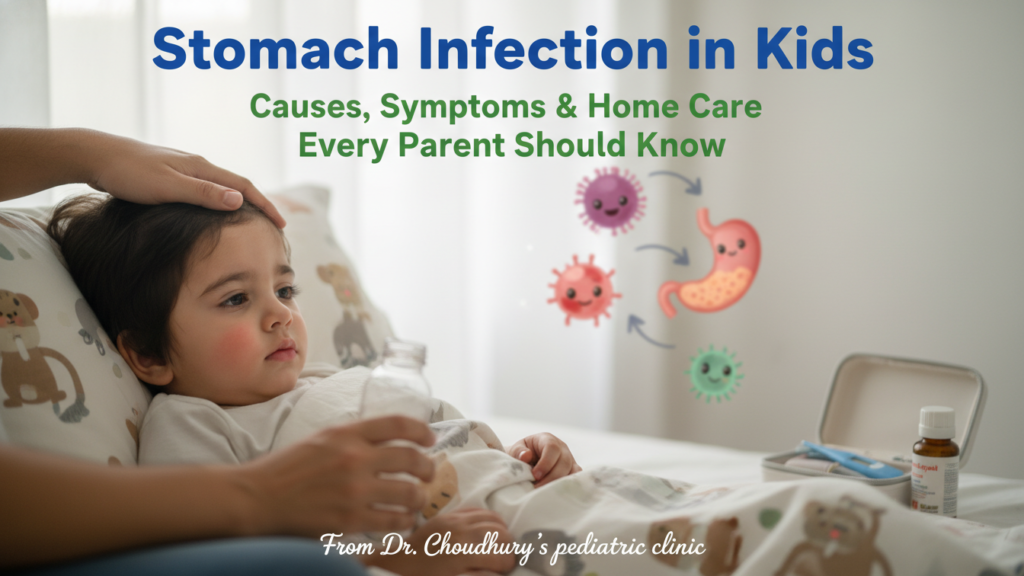
Stomach Infection in Kids: Causes, Symptoms & Home Care
Stomach infection in kid is one of the most common health problems in children, especially infants, toddlers, and school-going kids. Almost every parent faces this situation at some point—sudden stomach pain, loose motions, vomiting, or fever that leaves both the child and parents worried.
While most stomach infections are not serious and can be managed at home, some cases may become severe if not handled properly. Knowing the causes, early symptoms, correct home care, and warning signs can help parents take the right action at the right time.
This detailed guide by Dr. Sanjoy Choudhury. Best child doctor in Siliguri explains stomach infection in kids in simple, easy-to-understand language, so parents feel confident and prepared.
What Is a Stomach Infection in Children?
A stomach infection, also called gastroenteritis, is an infection of the stomach and intestines. It usually leads to symptoms like:
- Diarrhea (loose motions)
- Vomiting
- Stomach pain or cramps
- Fever
- Weakness and dehydration
Stomach infections are very common in children because their immune system is still developing, and they often come in contact with germs through food, water, toys, or school environments.
Common Causes of Stomach Infection in Kids
Understanding the cause helps in proper care and prevention.
1. Viral Infections (Most Common Cause)
Common Viruses Causing Stomach Infection in Children
| Virus Name | Commonly Affects | How It Spreads |
|---|---|---|
| Rotavirus | Infants & young children | Unwashed hands, contaminated food or water, close contact with infected persons |
| Norovirus | Children of all age groups | Unwashed hands, contaminated food or water, close contact with infected persons |
| Adenovirus | Infants & children | Unwashed hands, contaminated food or water, close contact with infected persons |
These infections often settle on their own with proper hydration and rest.
2. Bacterial Infections
Bacteria can cause more severe stomach infections.
| Bacteria Name | Common Source | How It Spreads |
|---|---|---|
| E. coli | Contaminated food & water | Eating contaminated food, drinking unsafe water, poor hygiene |
| Salmonella | Improperly cooked food | Undercooked eggs, meat, contaminated food, unsafe water |
| Shigella | Poor sanitation | Contaminated food or water, unwashed hands, close contact |
Bacterial infections may sometimes require medical treatment.
3. Parasitic Infections
Parasites like Giardia can also infect children, especially in areas with poor sanitation or unsafe water.
These infections may cause:
- Prolonged diarrhea
- Weight loss
- Stomach bloating
4. Food-Related Causes
- Eating street food
- Unhygienic snacks
- Spoiled or stale food
Children are more sensitive to food contamination than adults.
Symptoms of Stomach Infection in Children
Symptoms can vary depending on the cause and the child’s age.
| Category | Symptoms |
|---|---|
| Common Symptoms (All Children) | Loose motions (diarrhea), vomiting, stomach pain or cramps, fever, loss of appetite, weakness or tiredness |
| Symptoms in Babies & Toddlers | Excessive crying, refusal to feed, fewer wet diapers, sunken eyes, dry mouth |
| Duration of Symptoms | Viral infections: 2–5 daysBacterial infections: may last longerParasitic infections: can persist if untreated |
Signs of Dehydration Parents Must Watch For
Dehydration is the biggest risk during a stomach infection.
Mild to Moderate Dehydration Signs
| Severity Level | Signs to Look For |
|---|---|
| Mild to Moderate Dehydration | Dry lips and tongue, less urine, dark-colored urine, tiredness |
| Severe Dehydration (Medical Emergency) | Very little or no urine, sunken eyes, extreme weakness, fast breathing, drowsiness or confusion |
If these signs appear, medical attention is required immediately.
Home Care for Stomach Infection in Kids
Most stomach infections can be safely managed at home with proper care.
1. Keep Your Child Hydrated (Most Important)
| What Parents Should Do | What to Avoid |
|---|---|
| Give ORS (Oral Rehydration Solution) regularly | Soft drinks |
| Offer small sips every few minutes | Fruit juices |
| Continue breastfeeding for babies | Sugary beverages |
2. Simple & Light Diet
Diet During Stomach Infection in ChildrenOnce vomiting reduces, start light foods.
| Recommended Foods | Foods to Avoid |
|---|---|
| Rice water | Oily food |
| Plain rice or khichdi | Spicy food |
| Banana | Junk food |
| Curd (if tolerated) | Milk (if it worsens diarrhea) |
| Toast or plain biscuits | — |
3. Proper Rest
Rest helps the body fight infection faster. Avoid sending the child to school until fully recovered.
4. Maintain Hygiene
- Wash hands frequently
- Use clean utensils
- Clean toilets properly
- Keep nails trimmed
This prevents spreading the infection to others.
Medicines: What Parents Should Know
⚠️ Do not give medicines without consulting a pediatrician.
- Antibiotics are not needed for most viral infections
- Anti-diarrheal medicines are usually avoided in children
- Fever medicines should be given in correct doses
Always consult a pediatrician before giving any medication.
When Should Parents Take the Child to a Pediatrician?
Seek medical help if:
- Diarrhea lasts more than 2–3 days
- Child is vomiting continuously
- High fever persists
- Blood or mucus in stool
- Signs of dehydration appear
- Child is less than 1 year old
- Child becomes unusually sleepy or irritable
Early consultation prevents complications.
Can Stomach Infection Be Prevented?
Yes, many stomach infections can be prevented with simple steps.
Prevention Tips for Parents
- Encourage regular hand washing
- Use safe drinking water
- Wash fruits and vegetables properly
- Avoid outside junk food
- Keep food covered
- Ensure proper vaccination (like rotavirus vaccine)
Prevention is always better than treatment.
Stomach Infection in School-Going Children
Stomach Infection in School-Going Children: Risks & Prevention
| Why School-Going Children Are More Exposed | What Parents Should Teach Children |
|---|---|
| Shared food | Do not share water bottles |
| Common washrooms | Wash hands before eating |
| Close contact with classmates | Inform teachers if feeling unwell |
Frequently Asked Parent Concerns
Is stomach infection contagious?
Yes, especially viral infections. Proper hygiene reduces spread.
Can my child eat during infection?
Yes, but light and easily digestible foods are recommended.
How long should ORS be given?
As long as diarrhea or vomiting continues.
Final Thoughts for Parents
Stomach infection in children is common and usually not a cause for panic. With early care, proper hydration, and close observation, most children recover quickly.
However, parents should never ignore warning signs or dehydration symptoms. Timely medical advice ensures faster recovery and peace of mind.
If your child frequently suffers from stomach infections or symptoms seem severe, consulting a pediatrician is always the safest choice.
👶 Parent Reminder
Every child is different. What works for one child may not work for another. When in doubt, always consult Dr. Choudhury’s Pediatric Clinic